
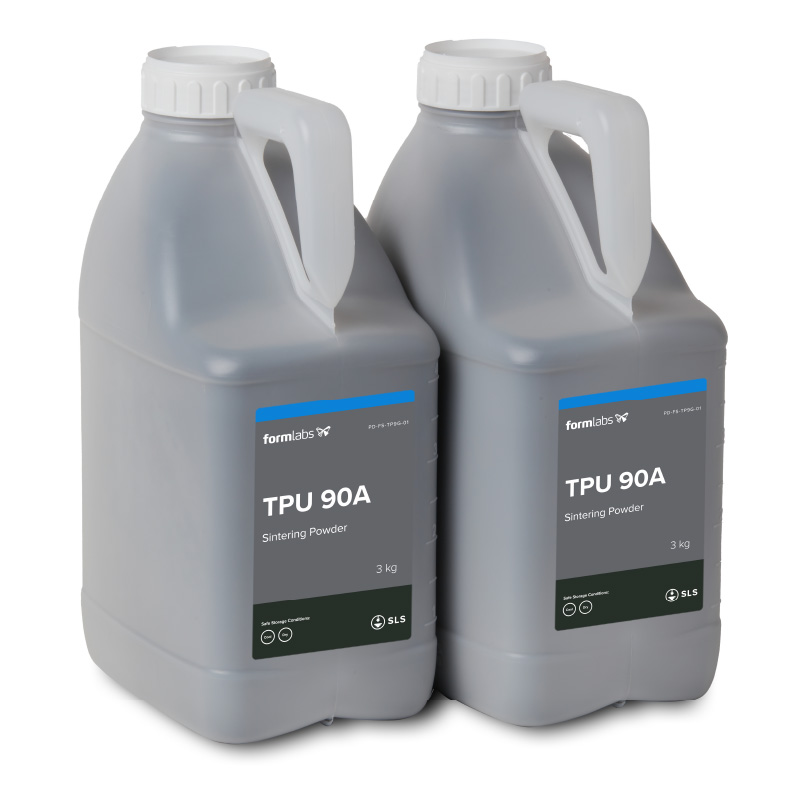

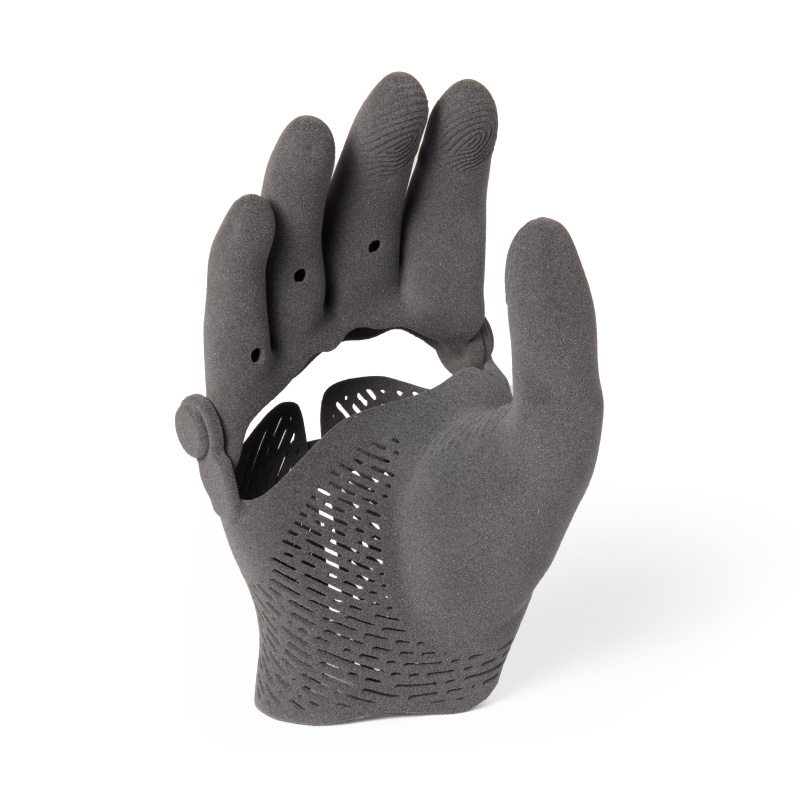
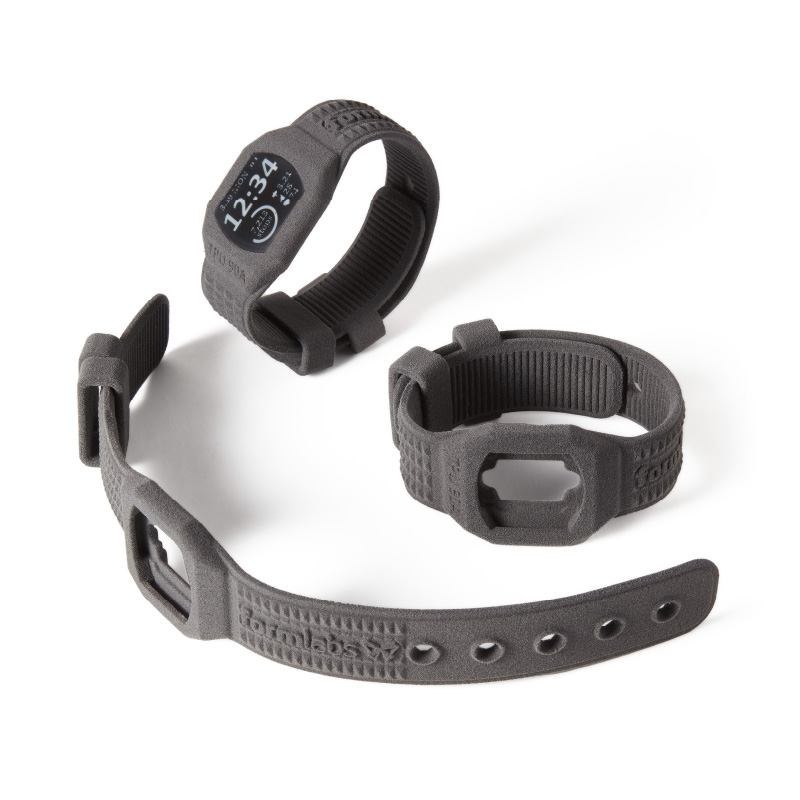
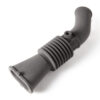
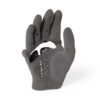
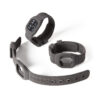

SLS 3D printing of TPU 90A plastic allows for the production of parts without support contact points, as is the case with SLA and FDM 3D printing. Parts can be sent directly to the patient after cleaning and without further post-processing.
In addition to medical applications, this material is also suitable for technical components such as shock absorbers, cable protectors or spring mechanisms.
Applications:
- Wearables and soft-touch elements
- Gaskets, seals, masks, drive belts, hoses
- Soles, splints, insoles, prostheses, orthoses
- Padding, dampers, bumpers
What does 90A mean?
This is the result of the “Shore” test. In this test, a point is pressed into the material. In this case, the “A” type point, which is intended for soft materials. The resistance of the material is then measured, thus determining its hardness. A score of 90A is equivalent to that of a shoe sole.
Bio-compability
- Non-cytotoxic (ISO 10993-5:2009)
- Non-irritating (ISO 10993-23:2021)
- Non-sensitizing (ISO 10993-10:2021)
Post-processing
Waterproofing with vapor smoothing
Formlabs TPU 90A can be vapor-smoothed using AMT PostPro SFX systems. This process fuses the outer layer and makes the material waterproof. For medical applications, this reduces the need for periodic cleaning and disinfection of the component.
Would you like to see this process in action? Then schedule an appointment at our
Printing tips
Achieving Lower Shore hardness
It’s possible to print parts with a lower Shore value by reducing the laser power during the sintering process. Formlabs has a detailed blog post about this.


