
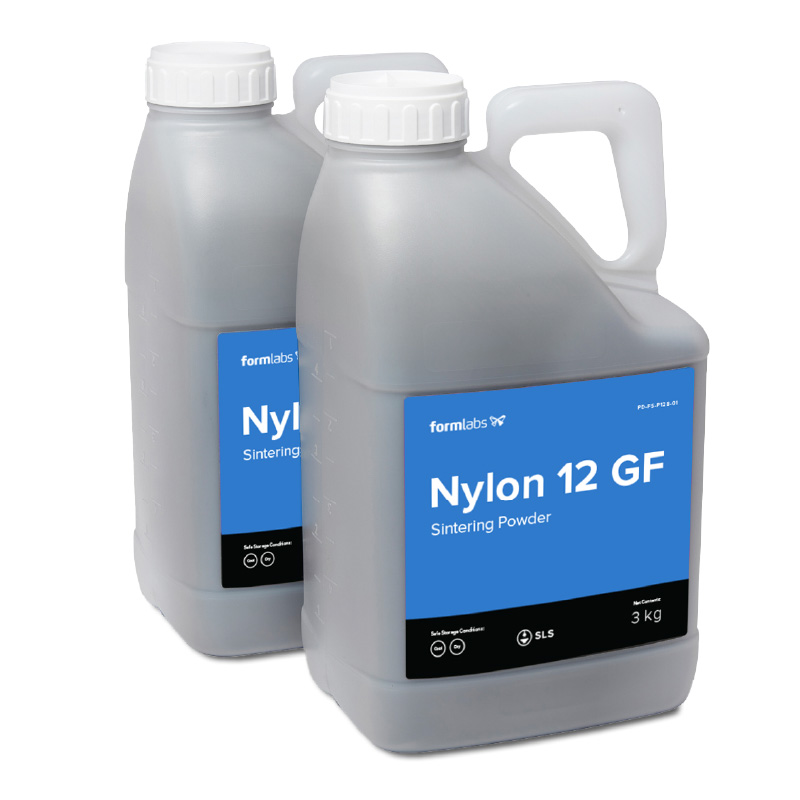

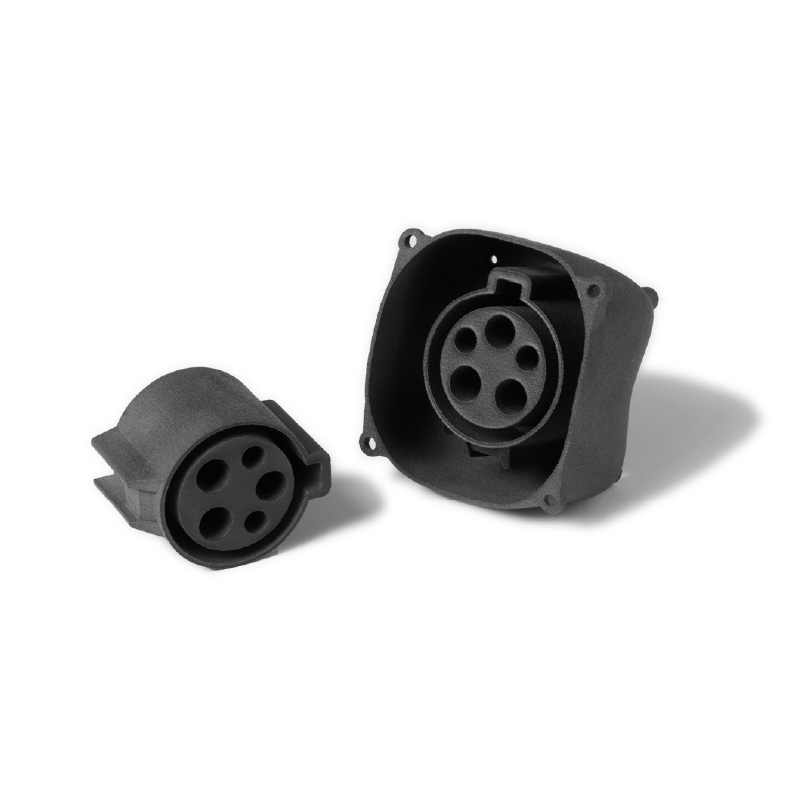


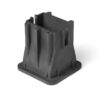

With Formlabs Nylon 12 GF, it’s possible to 3D print rigid parts that won’t deform under pressure up to 113°C (HDT-A). This enhanced temperature resistance, 26°C higher than standard Formlabs Nylon 12, is made possible by the addition of glass fibers and also limits deformation during the SLS 3D printing process.
Besides the higher operating temperature, this material is much stiffer (2.4 GPa) and will prevent parts from bending. Nylon 12 GF offers a 30 percent higher maximum bending resistance (66 MPa). This material is not suitable for shock absorption; for this, we recommend Formlabs Nylon 11 or Formlabs Nylon 12 Tough.
Formlabs Nylon 12 GF is suitable for:
- Internal structures
- Electronics
- Insulators
Both nylon and glass fibers offer high current resistance and are non-conductive (>10¹³ Ω cm – >10¹³ Ω cm). This is in contrast to carbon fiber-reinforced materials. Read more about fiber-reinforced 3D printing materials here.
Bio-compatibility
- Non-cytotoxic (ISO 10993-5:2009)
- Non-irritating (ISO 10993-10:2010/(R)2014)
- Non-sensitizing (ISO 10993-10:2010/(R)2014)
Printing tips
Formlabs Fuse Sift filter
To reuse unsintered powder, it must first be sintered. Because of the added glass fibers, it’s necessary to replace the standard 150µm filter of the Formlabs Fuse Sift with a coarser 300µm filter. Without this filter, the powder will clump together.


